Design Features
This is not a history lesson, rather, I am sharing a glimpse into how the design process works in my life. After seeing the image of the playful dolphin in the coat-of-arms, perhaps you can see the inspiration for the shape of my Shoulder Port.
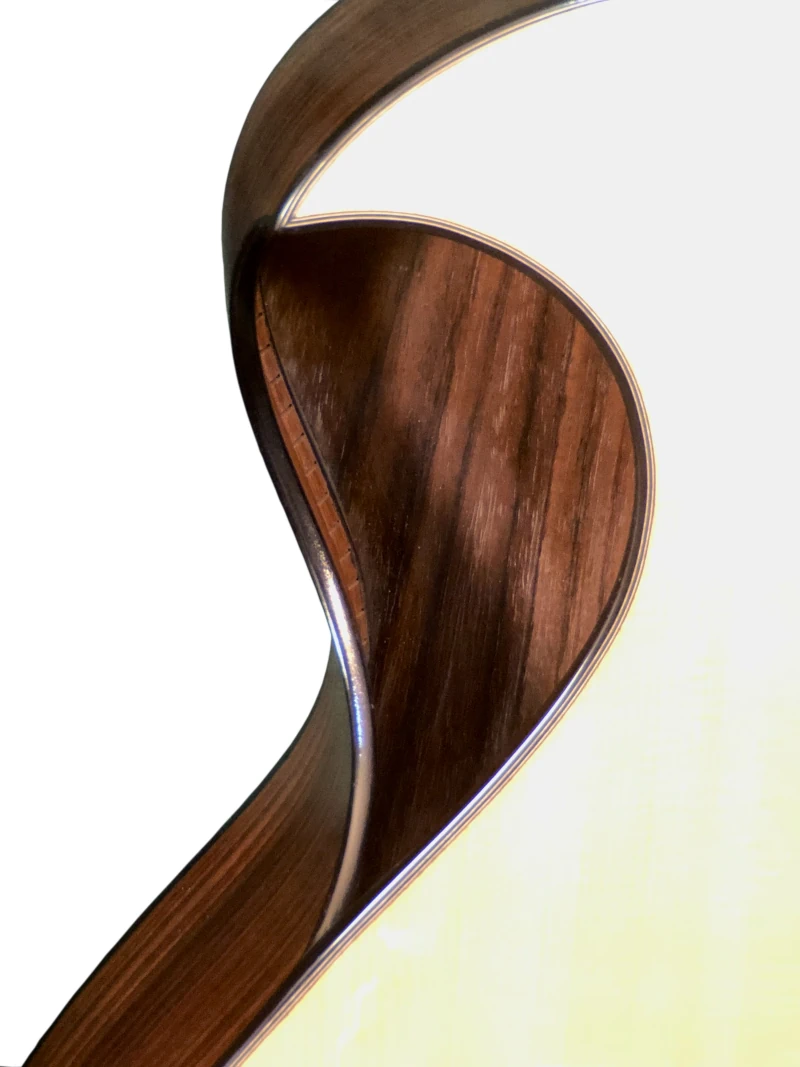
Shoulder Port
An arm bevel adds visual interest and contributes to a comfortable playing experience.
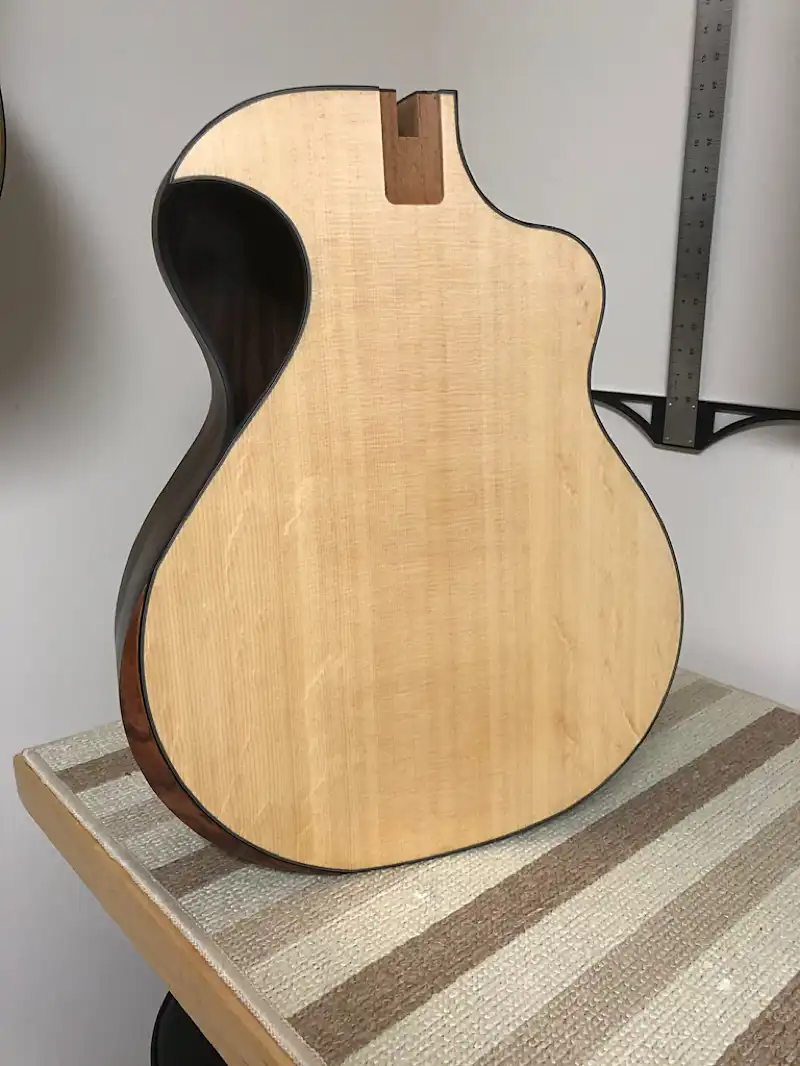
Dauphin Body with Shoulder Port and Arm Bevel
The neck is a 5-piece lamination, primarily of Mahogany. It is an "elevated" design, meaning the surface of the fretboard sits much higher off the soundboard at the neck joint. The neck joinery is a bit different than with typical designs where the fretboard extension glues down to the soundboard.
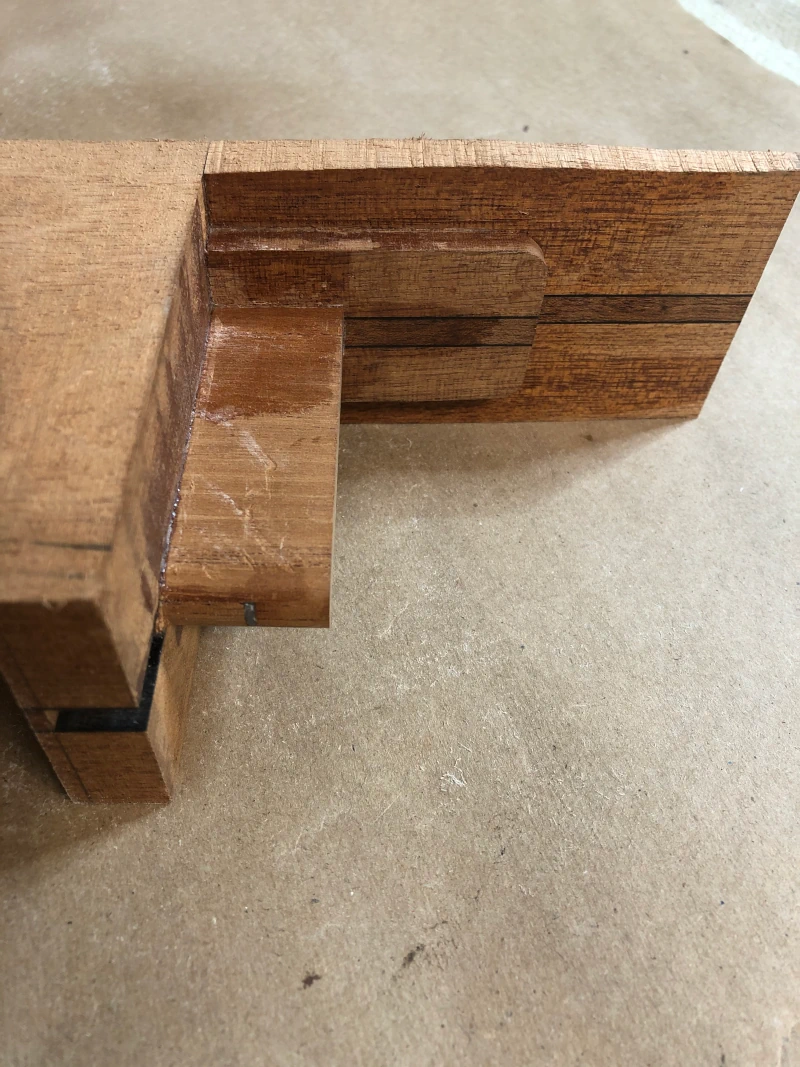
Neck Tenon
Another design element of interest is the open headstock. The triangular shape positions the posts of the tuners to be inline with the path of the strings. The tuners mount to the side of the headstock, as they would on a slotted headstock. The difference though, is that I am simply using Grover post tuners, not roller tuners.
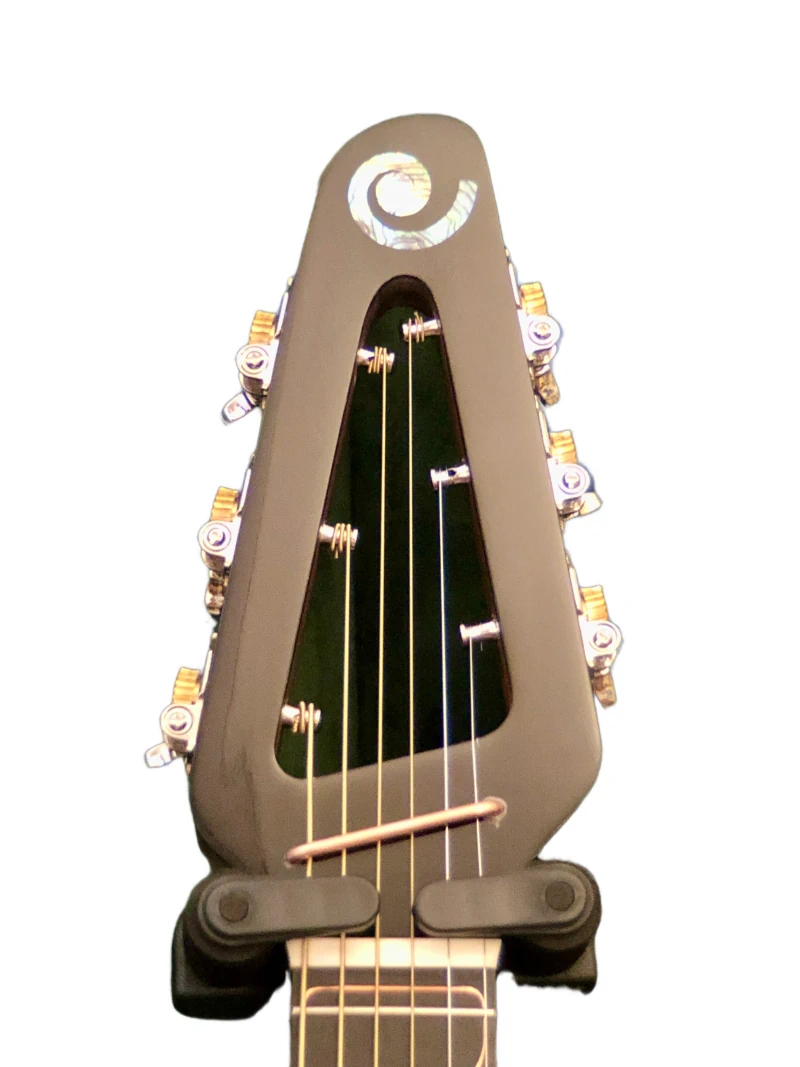
Dauphin Open Headstock
The photo of the headstock, above, prominently displays fret #0. With this approach, the purpose of the nut slot is merely to retain the string, preventing it from shifting from side-to-side. Since the strings fully rest on the fretwire, there are no "open" strings; rather, all strings are "fretted".
I inlaid copper wire around the perimeter of the fretboard. Instead of drawing four straight lines, I altered the path of the wire to form fret markers in common positions. The requisite fleur-de-lis is inlaid with the contrasting theme material.
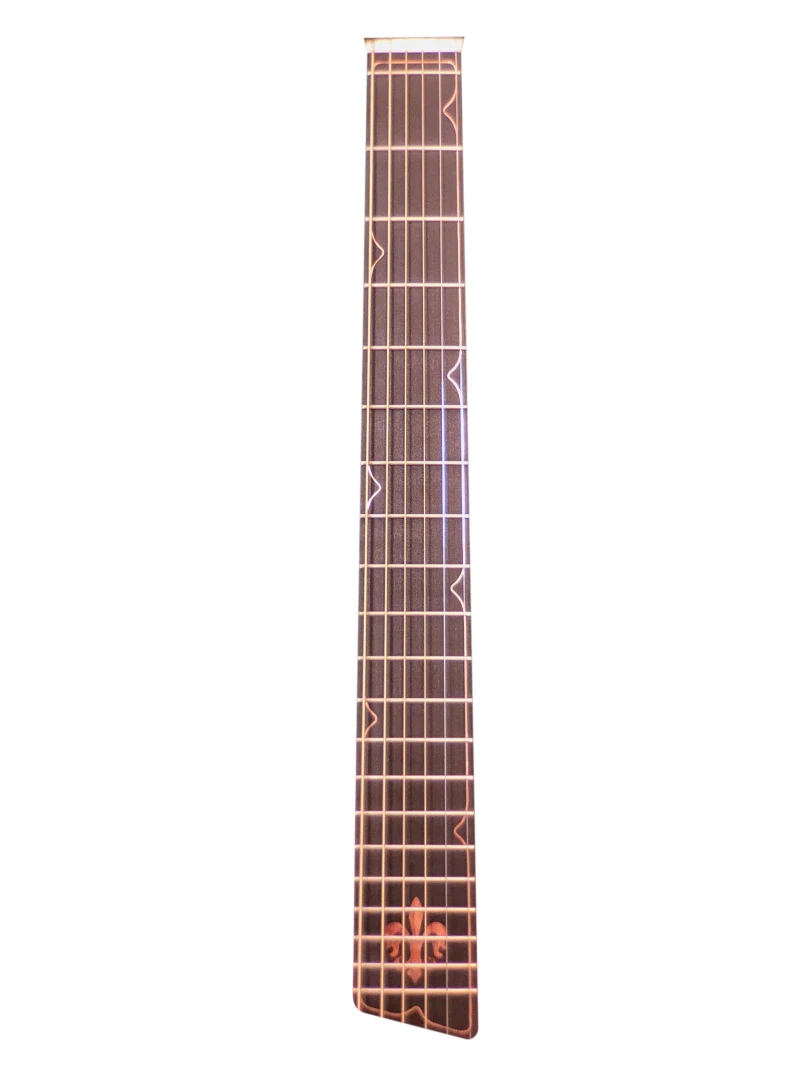
Dauphin Fretboard
The neck is of an "elevated fretboard" design, and couples with the neck block along two axis; both at the heel, and atop the soundboard.
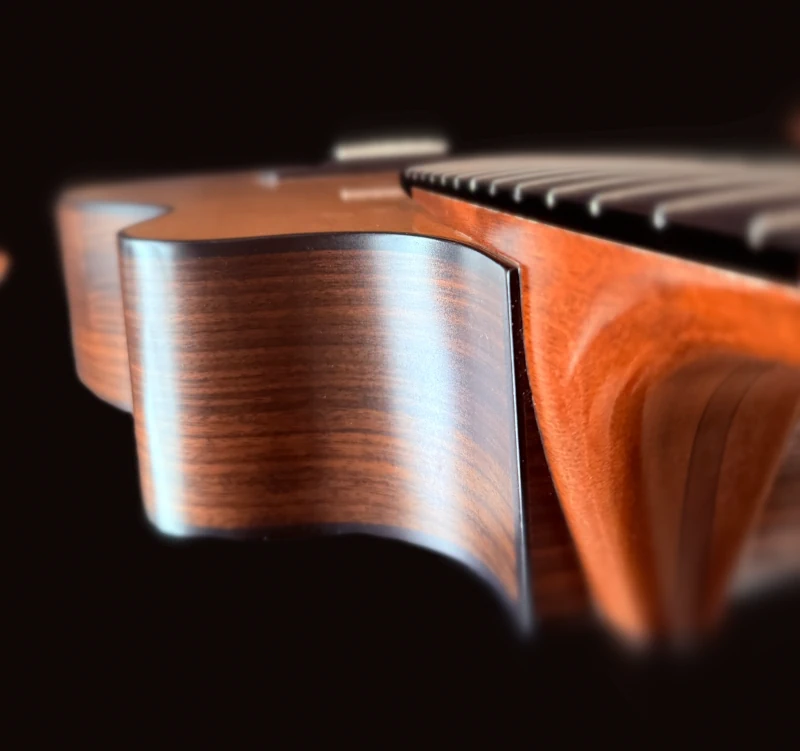
Dauphin Elevated Fretboard
The bridge features a variation on a "pinless" design. The ball end of the strings pass through a standard 3/16" hole. There is one for for every two strings. The ball end is retained by the slot; no pin is required. Each slot is sized to its respective string diameter.

Dauphin Bridge
The back is inlaid with a fleur-de-lis.

Dauphin Back with Fleur-de-lis
