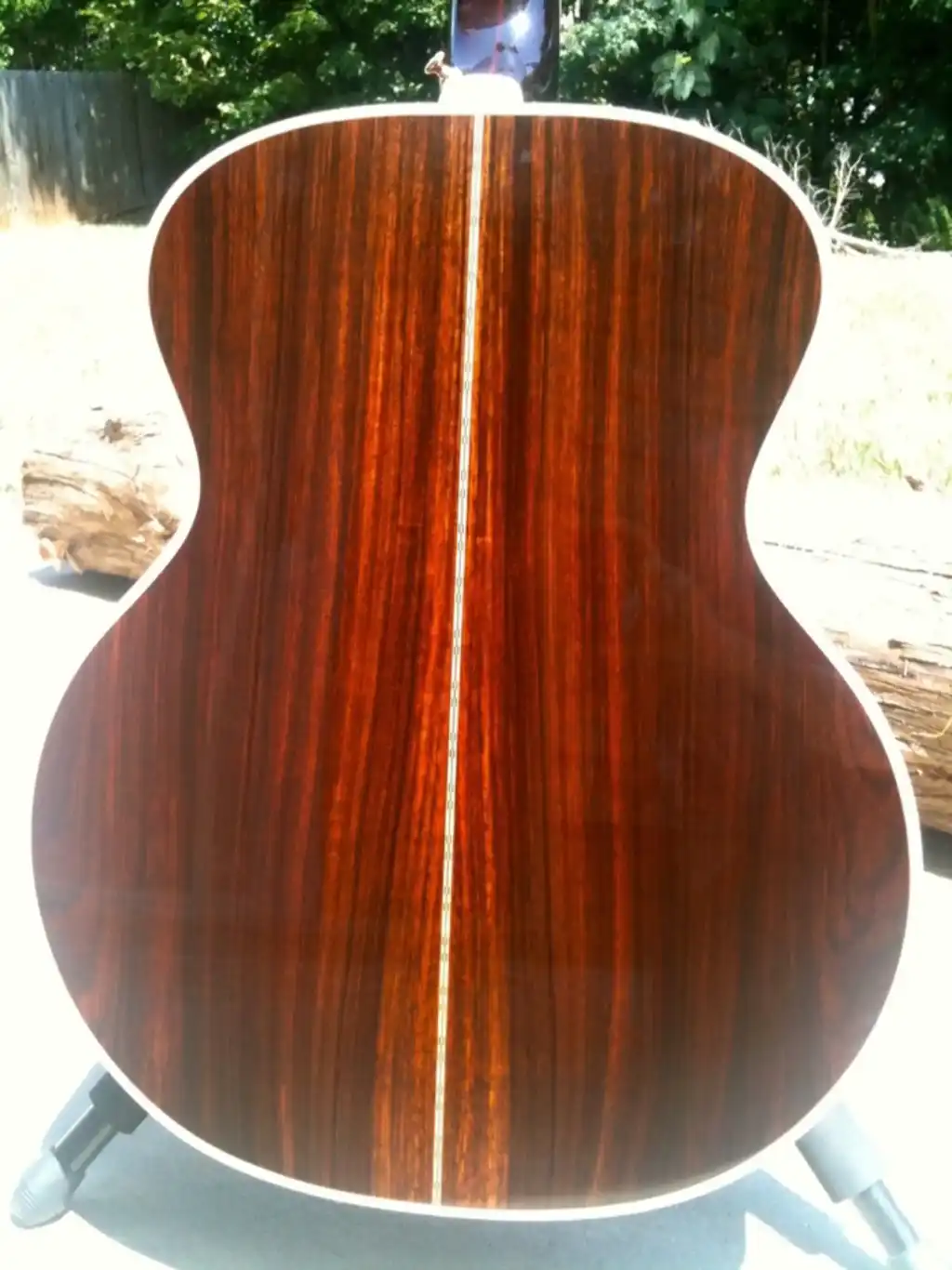
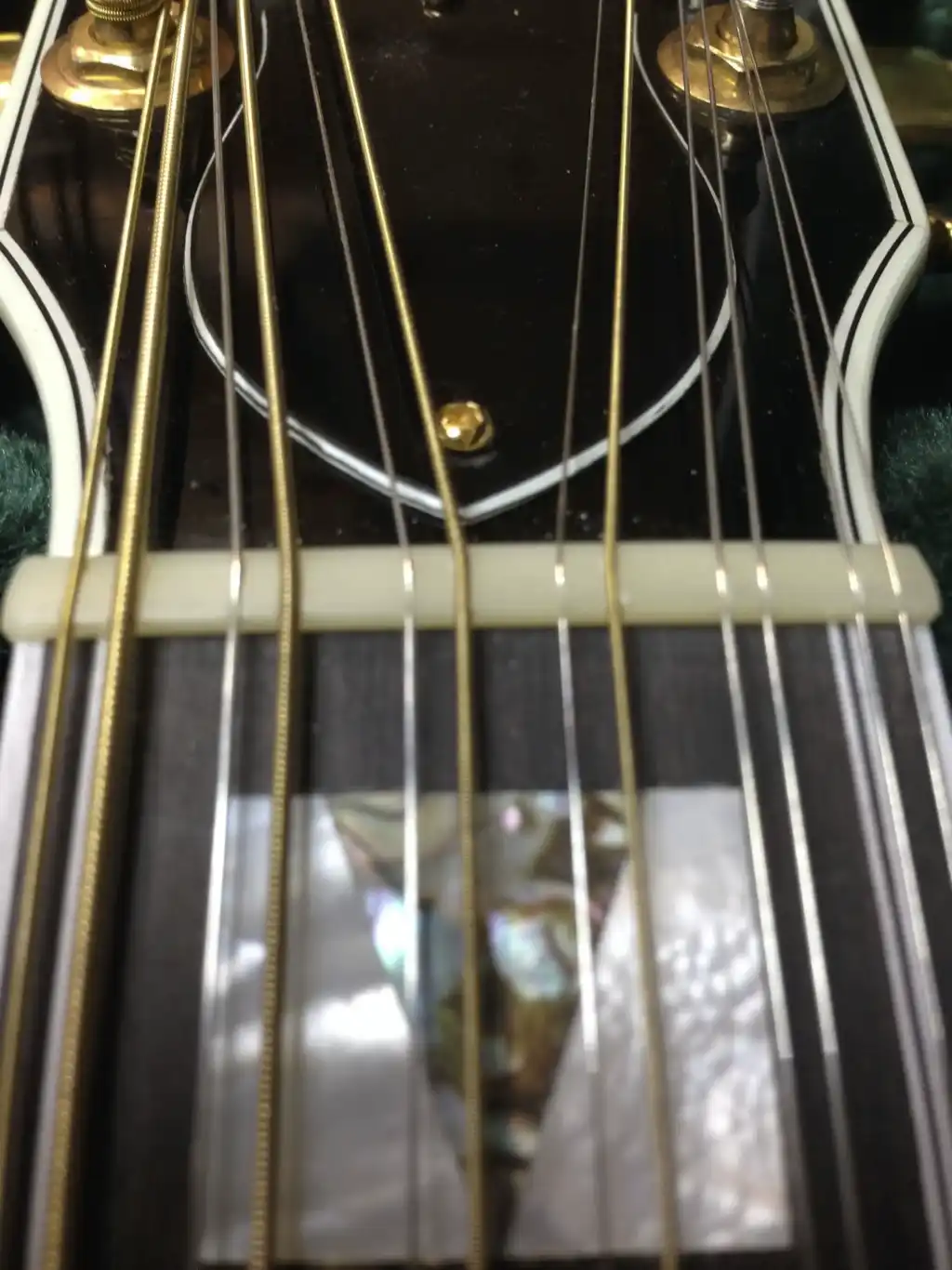
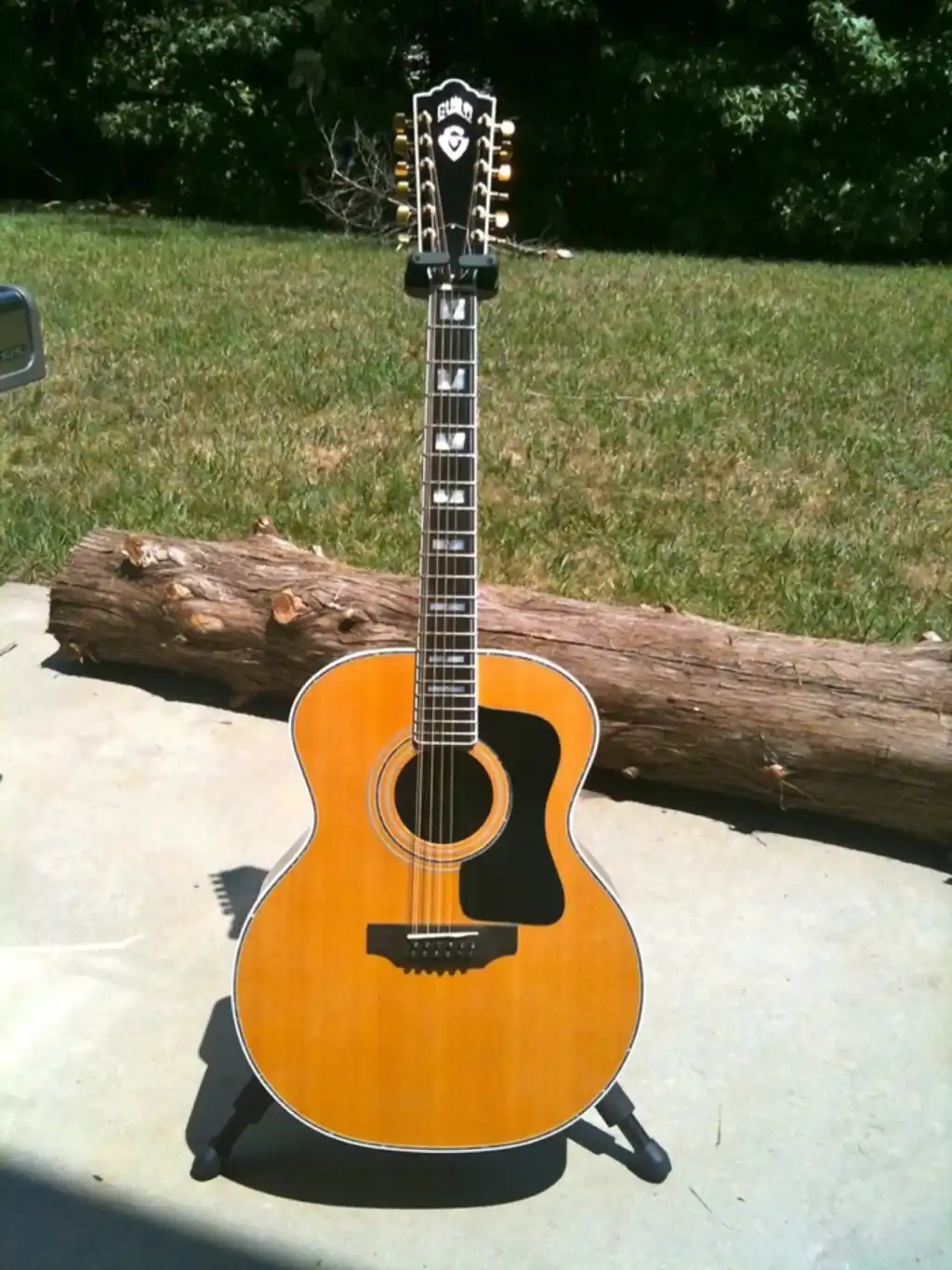
By the winter of 2009, my venerable 1976 Guild F-512 12-string was in need of some serious attention. It badly needed a neck reset (it had needed a neck reset for years) and the back of the neck was worn through to bare wood in places. You can't see it in the photo, below, but the finish on the soundboard was a mess, a combination of extensive travel, hauling it in and out of a variety of climates for decades and simple neglect. In places it was gooey from sweat and had chipped, crazed, cracked or worn off sufficiently to, in my opinion, warrant a refinish.
For reasons still unknown (I told myself I was “too busy”, and I never really liked working on my own guitars, anyway), I contacted a local guitar repair shop. The proprietor had worked for a well-respected local luthier and repairman. That luthier had done some excellent setup work on a couple of my guitars years earlier, but had indicated to me he was trying to get away from the business for health reasons. I conveyed my desire(s) regarding my 12-string to this former colleague of his who informed me he was quite familiar with Guild guitars. So I dropped off the guitar.
One year later, after many, many phone calls, my 12-string was returned to me.
The fretboard had been reduced to nearly half of its original thickness. The entire guitar was now spray tinted an horrific mustard yellow. Apparently, in an attempt to deal with the "sticky" lacquer issues, they had hand-sanded various portions of the guitar and, but for the soundboard, made no attempt to conceal the color change(s). The most affected was the soundboard, which had quite obviously been sanded using fingertips instead of a sanding block. The high and low spots were glaringly apparent, indicating the varying thickness of Spruce. In some places the soundboard was now paper-thin.
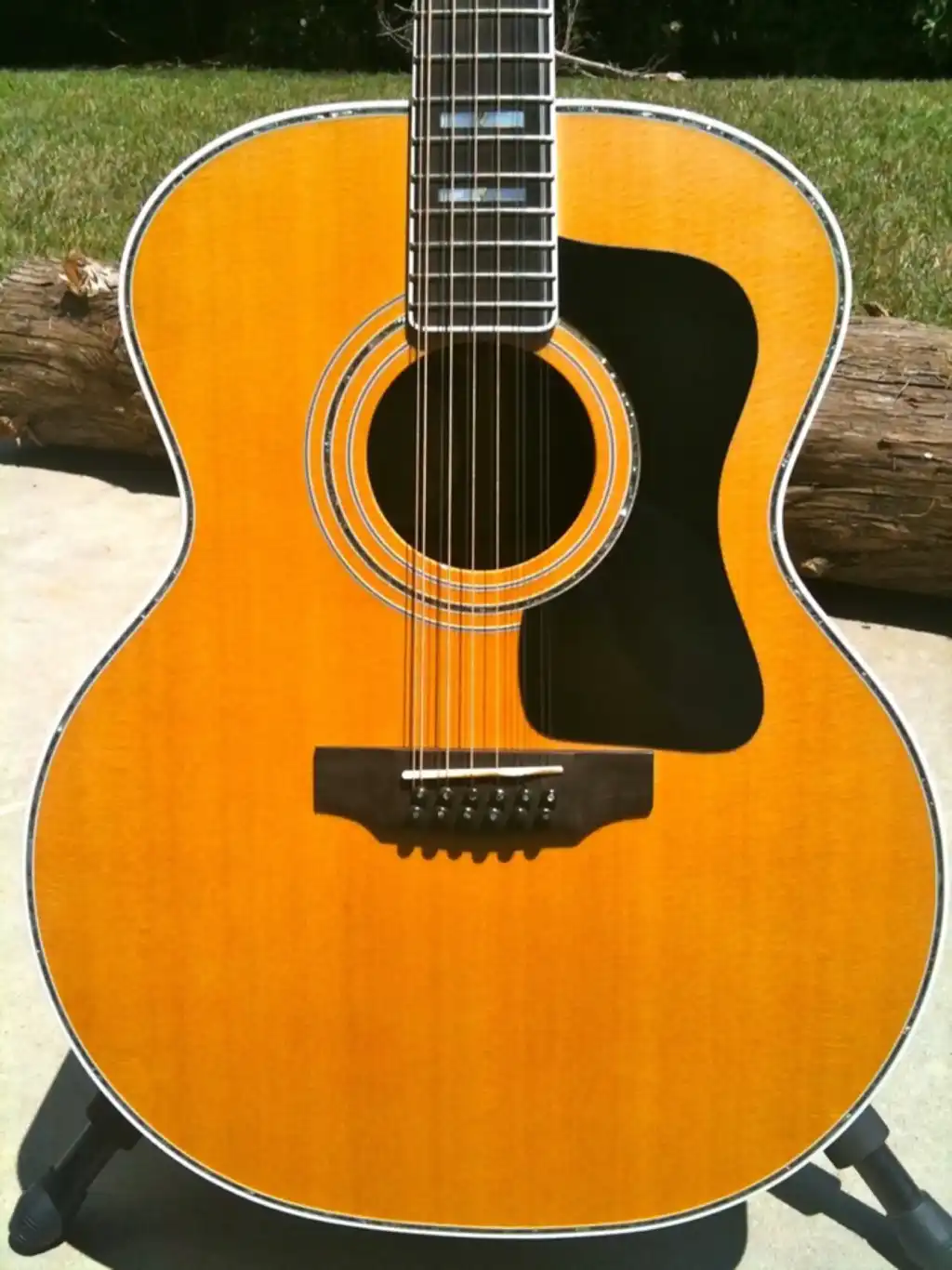
Without going into details, after heavy consideration I determined there was little to no recourse option available to me. The entire scenario was screaming Caveat Emptor and I was stuck with an instrument that was in worse condition than when I started. The options before me were fairly simple:
Of course I had to make it right, as I was unwilling to live with this guitar in such condition. The soundboard had been destroyed from hand sanding (it was paper-thin in places). The mustard yellow tinting was definitely ‘creative’, at best, the only reasonable explanation for which would be the presence of consciousness-altering chemicals during the artistic portion of the endeavor (this, of course, was never admitted to).
Well, overhaul it was. Since that meant adding a new soundboard, I would take the opportunity to add Paua inlay around both the soundhole and the perimeter of the soundboard.
With the top off, it is a perfect opportunity to clean up the inside of the box. Like many guitar shops back in the 70s, Guild used fabric tape on the sides to reinforce them against cracks. Over time the tape may shrink or curl or seven shift (due to undue heat). Everything was secured back down properly.
It was necessary to re-do the neck geometry, properly this time.
The old fretboard was a total loss, so that meant replacing it completely (and adding a new nut).
The old bridge was ruined, so it also needed to be replaced (along with the saddle).
At this point, there was no sense in trying to save any of the old binding; it was easier to just re-bind the entire guitar, add a new bridge, and completely re-bind the guitar.
Original equipment on my F-512 include the back and sides, neck, headplate and tuners. Everything else was replaced. This Guild got the compete makeover!
A little less than 2 years later I pulled the Nickel frets off and re-fretted the guitar with EVO Gold fretwire (a super-hard material and tough on my tools, but really pretty stuff). I fashioned a brand new bone nut and compensated saddle, and adjusted the action as low as I could get it for my style of playing.
I replaced the ancient and very heavy Grover Rotomatics with the Sperzel Open-Back Trim-Lok tuners. I special ordered them in a black and gold color combination. The Sperzel tuners are fraction of the weight of most other locking tuners, they perform with precision, and I find them visually stunning!
Well before I started this journey, before my guitar was ruined, I had installed an L.R Baggs Anthem pickup which worked wonderfully. I also had an Anthem in my Guild F-412 and Guild F-50R. I still heartily recommend the Anthem (if you don't mind dealing with a 9-volt battery). If this pickup has a "downside" it would be the warm, full, colored sound it produces on-stage (ironically, that is the very reason I recommend it).
I have grown to appreciate a cleaner, less-colored sound, so I replaced the active LR Baggs Anthem with a passive James May Ultra Tonic Pickup with onboard Feedback Suppression. And, did I mention: it is passive! As in, no battery required. This is such an impressive pickup - very accurate in its response. Imagine your favorite K&K pickup, but with onboard feedback suppression and a more balanced output.
My 1976 Guild F-512, renewed for another several decades of enjoyment: